Theory of Change Overview

The OhioKAN theory of change was developed in partnership with stakeholders representing both public and private service providers and advocates who serve kinship and adoptive families in urban, rural, and suburban settings across Ohio. The document is designed as an overview of how the activities of the OhioKAN program are expected to lead to positive outcomes for communities and families. The primary audience is staff and stakeholders who can use this document to understand the overall design of the program and as a quick desk reference for how activities contribute to the program’s goals.
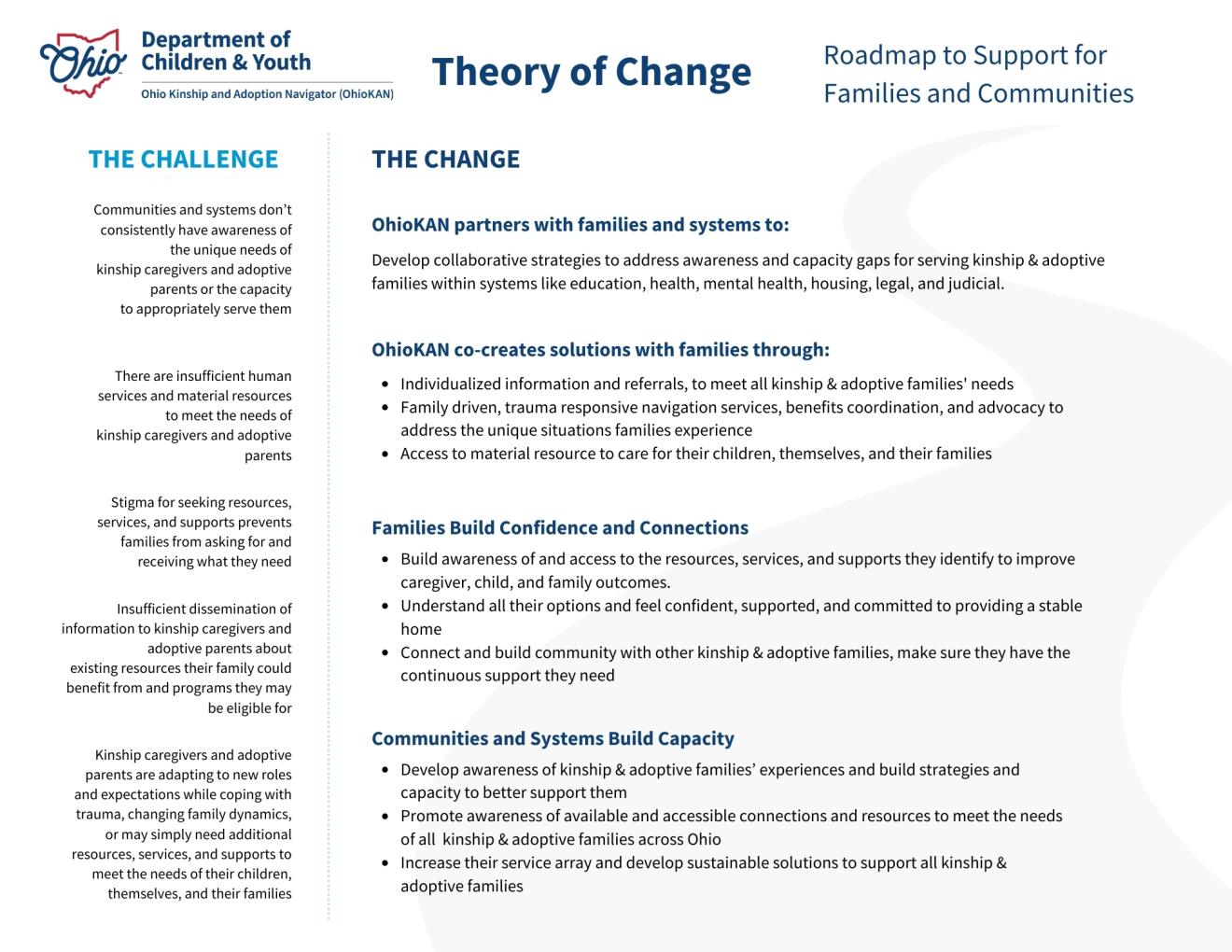
Figure 1. The first page of the OhioKAN theory of change documents the challenge that Kinship and Adoptive families face and the change that OhioKAN wishes to see in support of families and communities.
The OhioKAN theory of change seeks to address the following problem statements:
- Communities and systems don’t consistently have awareness of the unique needs of kinship caregivers and adoptive parents or the capacity to appropriately serve them
- There are insufficient human services and material resources to meet the needs of kinship caregivers and adoptive parents
- Stigma for seeking resources, services, and supports prevents families from asking for and receiving what they need
- Insufficient dissemination of information to kinship caregivers and adoptive parents about existing resources their family could benefit from and programs they may be eligible for
- Kinship caregivers and adoptive parents are adapting to new roles and expectations while coping with trauma, changing family dynamics, or may simply need additional resources, services, and supports to meet the needs of their children, themselves, and their families